


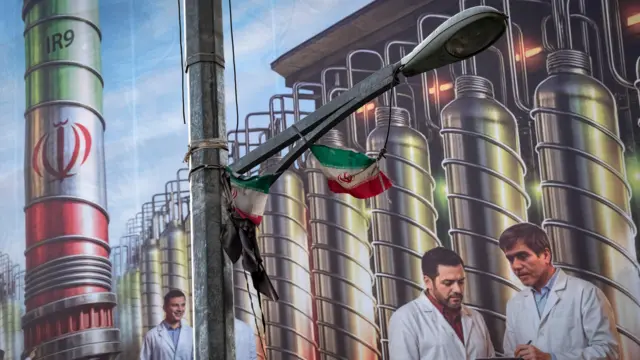
El programa nuclear de Irán volvió al centro del debate internacional tras los ataques lanzados en junio contra instalaciones clave y las recientes advertencias de Donald Trump sobre posibles acciones militares si Teherán no acepta un nuevo acuerdo. En medio de una escalada de tensión en Medio Oriente, Estados Unidos ha reforzado su presencia militar en la región mientras insiste en que no permitirá que Irán obtenga un arma atómica. Teherán, por su parte, niega buscar una bomba nuclear y sostiene que su programa tiene fines civiles.
El estado actual de las instalaciones nucleares iraníes no es completamente claro. Durante la guerra de 12 días entre Israel e Irán, fuerzas estadounidenses atacaron tres centros estratégicos: el complejo de investigación en Isfahán y las plantas de enriquecimiento en Natanz y Fordo. Aunque Washington aseguró que las infraestructuras fueron devastadas, el director del Organismo Internacional de Energía Atómica, Rafael Grossi, indicó posteriormente que los daños fueron severos pero no absolutos, dejando abierta la posibilidad de que parte del enriquecimiento de uranio pueda reanudarse en cuestión de meses.
Antes de los bombardeos, el OIEA estimaba que Irán acumulaba aproximadamente 440 kilogramos de uranio enriquecido al 60%, un nivel técnicamente cercano al 90% necesario para uso militar. Aunque aún existe una brecha entre el 60% y el grado armamentístico, expertos señalan que el salto es relativamente corto desde el punto de vista técnico si se cuenta con centrifugadoras operativas y reservas suficientes de material.
La principal incógnita es cuánto del inventario nuclear y de la infraestructura técnica sobrevivió a los ataques y si Teherán conserva la capacidad industrial para reconstruir rápidamente sus instalaciones. Analistas consideran que, aun con daños significativos, el conocimiento científico acumulado por Irán y su red de instalaciones subterráneas podrían permitirle recuperar parte de su programa en un plazo limitado, lo que mantiene la amenaza nuclear como un factor central en la seguridad regional.
En este contexto, la presión diplomática y militar aumenta. La comunidad internacional enfrenta el dilema de reforzar inspecciones y negociaciones para contener el avance del programa o asumir el riesgo de una nueva escalada bélica en Medio Oriente, donde cualquier paso en falso podría tener repercusiones globales en energía, seguridad y estabilidad política.
English version
Iran after the strikes: what remains of its nuclear program and what risk it poses
Iran’s nuclear program has once again become a focal point of global attention following the June strikes on key facilities and renewed warnings from Donald Trump about potential military action if Tehran refuses a new agreement. As tensions rise across the Middle East, the United States has reinforced its military presence in the region, insisting that Iran must not obtain a nuclear weapon. Tehran continues to deny pursuing a bomb, maintaining that its activities are civilian in nature.
The current condition of Iran’s nuclear infrastructure remains uncertain. During the 12-day conflict between Israel and Iran, U.S. forces targeted three strategic sites: the research complex in Isfahan and enrichment facilities in Natanz and Fordo. While Washington declared the sites were destroyed, the head of the International Atomic Energy Agency, Rafael Grossi, later said the damage was serious but not total, suggesting that some uranium enrichment capacity could be restored within months.
Before the strikes, the IAEA estimated Iran possessed around 440 kilograms of uranium enriched to 60% purity, technically close to the 90% level required for weapons use. Although the gap remains significant, experts note that the technical leap from 60% to weapons-grade material is relatively short if functioning centrifuges and sufficient stockpiles remain available.
The key question now is how much of Iran’s material inventory and technical infrastructure survived and whether Tehran retains the industrial capability to rebuild swiftly. Even with substantial damage, analysts argue that Iran’s accumulated scientific expertise and underground facilities could enable it to restore parts of its program within a limited timeframe, keeping the nuclear threat at the center of regional security concerns.
Amid mounting diplomatic and military pressure, the international community faces a difficult choice: intensify inspections and negotiations to contain the program, or risk a renewed escalation in the Middle East, where miscalculations could have far-reaching consequences for global energy markets, security, and political stability.
Más Noticias
 7 enero, 2024 Inició labores el alcalde del municipio.
- 31 octubre, 2025 Trump amenaza con destruir carteles en América Latina.
- 4 agosto, 2021 Lactancia Materna es un acto de amor y unión”, secretaria de Salud de Dosquebradas.
- 29 julio, 2020 78 Contagios Nuevos ded la Covid-19 se Registraron en Risaralda