


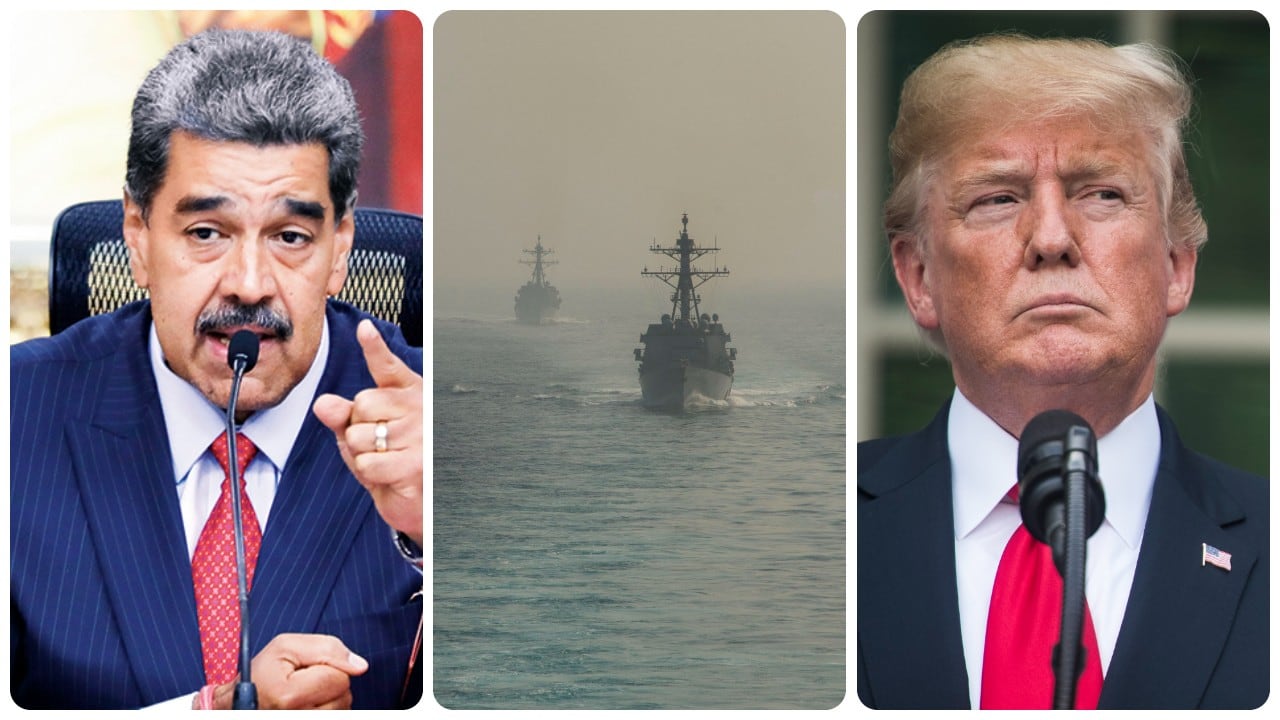
El régimen de Nicolás Maduro ha tomado posición en un posible conflicto militar, respaldando a China y lanzando una advertencia a Estados Unidos. La declaración se produjo el 28 de diciembre de 2025, durante una conferencia de prensa en Caracas, donde el presidente venezolano reiteró su oposición a cualquier intervención extranjera en asuntos internacionales. Maduro afirmó que «la soberanía de los países no puede ser violada por intereses imperiales», refiriéndose a las acciones de EE.UU. en el Pacífico Occidental. Este posicionamiento se suma a la creciente alianza entre Venezuela y China, que ha fortalecido sus relaciones estratégicas en los últimos años.
El contexto de esta intervención se enmarca en la creciente tensión entre EE.UU. y China, especialmente en relación con el estrecho de Taiwán. Maduro ha destacado que cualquier intento de desestabilización en la región afecta directamente a América Latina, y que países como Venezuela no pueden permanecer neutralizados. En su discurso, el mandatario venezolano subrayó que «la paz mundial no se construye con bombas, sino con diálogo y respeto mutuo». Esta postura refleja una alianza estratégica que incluye acuerdos comerciales, militares y diplomáticos entre Caracas y Pekín, que han crecido desde 2017.
Según fuentes diplomáticas, Venezuela ha recibido apoyo tecnológico y militar de China, incluyendo la adquisición de drones y sistemas de defensa aérea. Además, el gobierno de Maduro ha rechazado las sanciones impuestas por EE.UU. a empresas chinas, calificándolas de «actos de agresión económica». La relación entre ambos países ha sido reforzada por el intercambio de embajadores y la firma de acuerdos en materia energética y de infraestructura. En este escenario, Venezuela se posiciona como un aliado clave en la región para China, especialmente en temas relacionados con la geopolítica del hemisferio occidental.
La advertencia de Maduro también tiene implicaciones en el contexto regional, donde países como Colombia y Brasil han expresado preocupación por la creciente influencia china en América Latina. Aunque el gobierno venezolano niega tener una agenda expansionista, analistas señalan que su alineamiento con China podría alterar el equilibrio de poder en la región. Además, el presidente Maduro ha llamado a otros países latinoamericanos a adoptar una postura de no alineación frente a las tensiones entre grandes potencias, destacando que «la historia no debe repetirse con nuevas guerras frías».
English version
Maduro backs China and warns US amid possible military conflict
The regime of Nicolás Maduro has taken a stance in a possible military conflict, supporting China and issuing a warning to the United States. The statement was made on December 28, 2025, during a press conference in Caracas, where the Venezuelan president reiterated his opposition to any foreign intervention in international affairs. Maduro stated that «the sovereignty of countries cannot be violated by imperial interests,» referring to U.S. actions in the Western Pacific. This position comes as Venezuela strengthens its strategic alliance with China, which has grown significantly in recent years. The Venezuelan leader emphasized that «peace in the world cannot be built with bombs, but with dialogue and mutual respect.»
The context of this intervention is rooted in the rising tensions between the U.S. and China, particularly regarding the Taiwan Strait. Maduro highlighted that any attempt to destabilize the region directly affects Latin America, and that countries like Venezuela cannot remain neutral. In his speech, he stressed that «the peace of the world must be built through dialogue and respect.» This stance reflects a strategic alliance that includes trade agreements, military cooperation, and diplomatic ties between Caracas and Beijing. Since 2017, Venezuela has received technological and military support from China, including drones and air defense systems.
According to diplomatic sources, Venezuela has received technological and military support from China, including the acquisition of drones and air defense systems. Additionally, the Maduro government has rejected U.S. sanctions against Chinese companies, calling them «acts of economic aggression.» The relationship between both countries has been strengthened by the exchange of ambassadors and the signing of agreements in energy and infrastructure. In this context, Venezuela positions itself as a key ally for China, especially in matters related to the geopolitics of the Western Hemisphere.
Maduro’s warning also has implications for the regional context, where countries like Colombia and Brazil have expressed concern over China’s growing influence in Latin America. Although the Venezuelan government denies having an expansionist agenda, analysts point out that its alignment with China could shift the balance of power in the region. Furthermore, President Maduro has called on other Latin American countries to adopt a non-aligned stance amid great power tensions, emphasizing that «history should not repeat itself with new cold wars.»
Más Noticias
 19 octubre, 2019 Jesús María Hernández, Candidato a la Alcaldía de Pereira, Apoya a Victor Manuel Tamayo, a la Gobernación de Risaralda
- 14 marzo, 2021 Con la Asamblea de la BID, Colombia ratifica su protagonismo en la región: Duque
- 27 noviembre, 2021 Alcalde de Dosquebradas. gestionó más de $840
millones en el alumbrado navideño
• Por primera vez en el municipio, la zona rural tendrá iluminación
navideña.
• El consumo de energía del alumbrado público navideño no se cobra en la
factura de los usuarios.
Dosquebradas, 25 de noviembre de 2021. Empresa de Todos. La
Administración ‘Empresa de Todos’ logró, en esta Navidad, unir a dos
grandes empresas de energía como lo son CHEC y DELSA en un trabajo
conjunto para regalarle a la ciudad un hermoso alumbrado navideño en
más de 12 puntos estratégicos en la ciudad.
“Desde el mes de abril iniciamos los acercamientos con la CHEC y DELSA
con una bolsa de $840 millones, con el fin de alumbrar el municipio en
esta navidad. Entre los sitios iluminados está el lago La Pradera, Av. Santa
Mónica, Av. La Pradera, Av. Simón Bolívar y otros sitios que, por primera
vez, se van a iluminar como lo es el sector rural, algo muy importante
puesto que éste también hace parte del Municipio y se merece estar
iluminado”, indicó el alcalde de Dosquebradas, Diego Ramos Castaño.
De igual forma, el mandatario señaló que el consumo de energía del
alumbrado público navideño no se cobra en la factura de los usuarios, es
un costo que asumen las empresas prestadoras del servicio: “esta alianza
le cuesta al municipio cero pesos, y no quiere decir que los cobros les
llegan a los afiliados en el mes de enero y febrero, esto es un regalo de
CHEC y DELSA”.
La navidad también trae oportunidades, puesto que la ‘Empresa de Todos’
está trabajando por la reactivación económica del municipio, es por ello
gran parte de las figuras del alumbrado son elaboradas por madres y
padres cabeza de hogar dosquebradenses, con el fin de promover el
turismo y la generación de empleo.
“A partir de un trabajo articulado con el alcalde de Dosquebradas y con
DELSA, con los cuales logramos construir un acuerdo que confiamos que
va a ser de total agrado de los dosquebradenses, los cuales podrán visitar
los lugares, tomarse la foto y disfrutar en familia, alegrando la navidad y
contribuyendo a la reactivación económica.”, expresó Santiago Villegas
Yepes, gerente general de CHEC Grupo EPM.
Se eligió un alumbrado tradicional, con figuras inspiradas en el pesebre,
estrellas, árboles, animales, pozos y otros elementos que invitan a
celebrar la vida en familia con respeto y alegría.
Dato de interés
• La ciudad contará con iluminación navideña desde 6:30 pm. hasta
la 1:00 a.m.
• El alumbrado navideño cuenta con más de 310 figuras instaladas
en la zona urbana y rural del municipio. - 22 marzo, 2025 POR EL ESCRITOR, COMUNICADOR SOCIAL PERIODISTA , RUBÉN DARÍO FRANCO NARVÁEZ, PRESIDENTE COMUNICADORES SOCIALES PERIODUSTAS RISARALDA PRI.


