

Por: Luis Alberto Figueroa, Comunicador Social Periodista. Tarjeta Profesional 0222 expedida por el Ministerio de Educación Nacional.
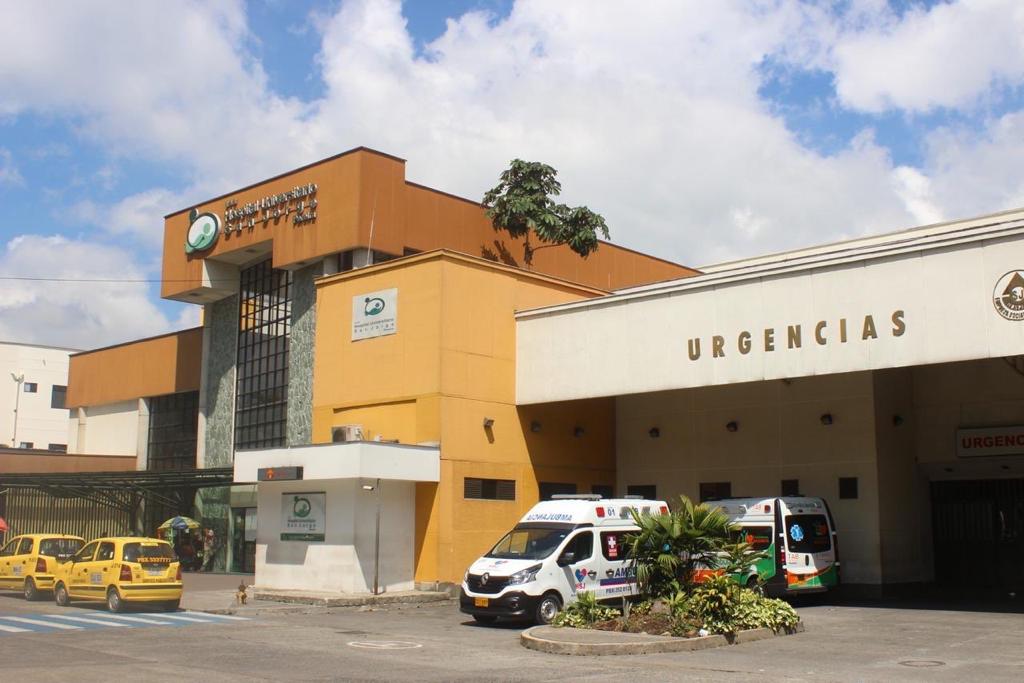
El Hospital Universitario San Jorge de Pereira presentó su informe de rendición de cuentas correspondiente a la vigencia 2025, destacando importantes avances en atención en salud, fortalecimiento de infraestructura, desarrollo del talento humano y sostenibilidad económica. Durante la presentación, realizada ante la comunidad, funcionarios y representantes institucionales, el gerente Javier Alejandro Gaviria Murillo resaltó que la entidad mantiene la categoría de hospital sin riesgo financiero, condición que garantiza su viabilidad y continuidad en la prestación de servicios.
Uno de los principales resultados expuestos fue el crecimiento en la atención de pacientes. Durante 2025, la institución atendió a 167.982 usuarios, superando los 166.575 registrados el año anterior. Del total de personas atendidas, el 58 % correspondió a mujeres y el 42 % a hombres. Asimismo, se destacó la implementación de la Ruta Dorada Oncológica, estrategia mediante la cual fueron valorados 72 pacientes con sospecha de cáncer infantil, permitiendo diagnósticos oportunos y seguimiento especializado.
En materia de infraestructura y modernización tecnológica, el hospital alcanzó un cumplimiento cercano al 100 % de sus metas. Entre los proyectos ejecutados se encuentran la instalación de paneles solares, la renovación de sistemas de aire acondicionado, la adquisición de equipos médicos para diferentes áreas asistenciales y la actualización de herramientas informáticas. Estas inversiones buscan mejorar la calidad de la atención y optimizar los procesos internos de la institución.
El componente de talento humano en salud registró un cumplimiento del 100 %, respaldado por una planta de 476 funcionarios y 895 colaboradores vinculados mediante diferentes modalidades, para un total de 1.371 trabajadores. Según la administración, el fortalecimiento del recurso humano ha sido fundamental para garantizar una atención eficiente y responder a la creciente demanda de servicios especializados en la región.
Las cifras financieras también reflejan una evolución positiva. Durante 2025, el hospital reportó cuentas por más de $281 mil millones y un recaudo superior a los $208 mil millones, superando los registros obtenidos en 2024. La recuperación financiera alcanzó el 17,9 %, mientras que la eficiencia en el gasto llegó al 4,6 %, permitiendo cerrar la vigencia con un excedente positivo de $5.183 millones.
Gracias a estos resultados, el Hospital Universitario San Jorge ratifica su posición como una de las principales instituciones de salud pública en Risaralda, consolidando procesos de crecimiento y fortalecimiento que le permiten proyectar nuevos avances en infraestructura, tecnología y atención médica para beneficio de la comunidad.
English version
San Jorge University Hospital Strengthens Management and Maintains Financial Stability
By: Luis Alberto Figueroa, Social Communicator and Journalist. Professional License 0222 issued by the National Ministry of Education.
San Jorge University Hospital in Pereira presented its 2025 accountability report, highlighting significant progress in healthcare services, infrastructure improvements, workforce development, and financial sustainability. During the presentation, attended by community members, public officials, and institutional representatives, hospital manager Javier Alejandro Gaviria Murillo emphasized that the institution continues to be classified as a hospital without financial risk, ensuring its long-term viability and service capacity.
One of the most important achievements was the increase in patient care. During 2025, the hospital treated 167,982 patients, surpassing the 166,575 users served in 2024. Of the total number of patients, 58 percent were women and 42 percent were men. The institution also highlighted the implementation of the Golden Oncology Pathway, through which 72 patients with suspected childhood cancer received specialized evaluation and follow-up.
Regarding infrastructure and technological modernization, the hospital achieved nearly full compliance with its objectives. Key projects included the installation of solar panels, modernization of air-conditioning systems, acquisition of medical equipment for several departments, and upgrades to computer systems. These investments are aimed at improving service quality and increasing operational efficiency.
The healthcare workforce component achieved 100 percent compliance. The institution currently employs 476 permanent staff members and 895 additional collaborators through various contractual arrangements, totaling 1,371 workers. Hospital management stated that strengthening human resources has been essential to maintaining efficient healthcare services and meeting growing regional demand.
Financial indicators also showed positive results. During 2025, the hospital reported accounts exceeding 281 billion pesos and collections surpassing 208 billion pesos, outperforming the previous year’s figures. Financial recovery reached 17.9 percent, while spending efficiency stood at 4.6 percent, allowing the institution to close the year with a positive surplus of 5.183 billion pesos.
These results reinforce San Jorge University Hospital’s position as one of the leading public healthcare institutions in Risaralda, supporting continued growth and future investments in infrastructure, technology, and medical services for the benefit of the community.